
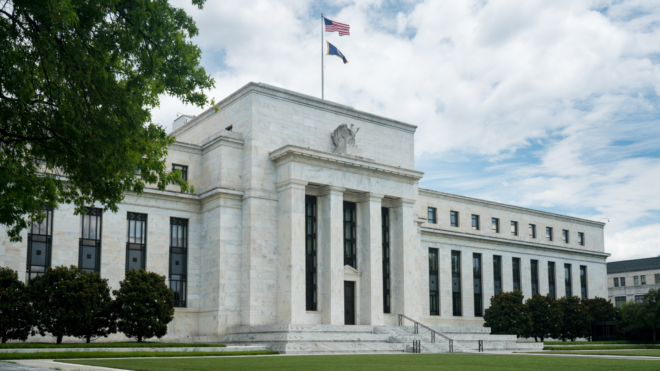
The Federal Reserve’s March 2026 meeting delivered a widely expected outcome: interest rates were held steady. However, the decision itself is only part of the story.
Beneath the headline, the Fed’s messaging highlighted something more important — ongoing uncertainty around inflation, economic growth, and future policy direction.
While markets often focus on whether rates move up or down, long-term investors may benefit more from understanding what these signals mean for their financial strategy.
Looking beyond the headlines, here are five key takeaways from the latest Fed meeting and what they may mean for investors.
1. The Direction of Rates Matters More Than the Decision
The Fed maintained its benchmark interest rate in the 3.5%–3.75% range, continuing its pause from earlier this year.
While no change was made, forward guidance remains critical. Current projections suggest just one potential rate cut in 2026, indicating that rates may stay elevated longer than some investors previously expected.
For investors, this reinforces an important point: It’s not just about where rates are today, but where they may be headed.
Higher-for-longer rate environments can influence:
- Bond yields and fixed income opportunities
- Equity valuations and borrowing costs
- Portfolio income strategies
Understanding rate direction can help investors position portfolios more effectively over time.
2. Inflation Remains Above Target
Although inflation has moderated from prior highs, it remains above the Fed’s long-term 2% target, with projections indicating continued pressure.
Recent developments — including rising energy prices driven by the conflict in Iran — have added complexity to the inflation outlook.
For investors, persistent inflation can impact:
- Purchasing power in retirement
- Real returns on investments
- Long-term income planning
This underscores the importance of incorporating inflation considerations into a comprehensive financial strategy.
3. Uncertainty Is Driving Policy Decisions
A central theme of this meeting was uncertainty.
The Fed specifically noted elevated uncertainty tied to global developments, including the ongoing conflict in Iran and its impact on oil prices, inflation, and economic growth. Even Fed Chair Jerome Powell emphasized that the full effects remain unclear.
This creates a challenging environment where:
- Inflation risks remain elevated
- Economic growth may face pressure
- Policy decisions become more data-dependent
For investors, uncertainty often translates into market volatility and shifting expectations.
However, uncertainty is not new, and it is not something investors can control. What matters is how a financial strategy is built to respond to it.
4. The Labor Market Is Stable, But Showing Signs of Softening
The labor market remains relatively stable, with unemployment holding steady. However, job growth has slowed, and recent data suggests a more balanced, but less robust, employment environment.
This creates a delicate balance for the Fed:
- A strong labor market supports economic growth
- A weakening labor market may signal broader economic slowdown
For investors, labor market conditions can influence:
- Consumer spending trends
- Corporate earnings
- Broader market performance
Monitoring these trends is important, but reacting to short-term data shifts can often lead to unnecessary portfolio changes.
5. Your Financial Plan Shouldn’t Depend on the Fed
Perhaps the most important takeaway is this: No financial plan should rely on predicting Federal Reserve decisions.
The Fed operates in a complex and evolving environment, adjusting policy based on incoming data and changing economic conditions. As this meeting demonstrated, even policymakers acknowledge the limits of forecasting.
Rather than attempting to anticipate rate moves or market reactions, investors may benefit from focusing on what they can control:
- Asset allocation
- Risk management
- Income planning strategies
- Long-term financial goals
A well-structured plan is designed to function across a range of economic environments – not just one specific outcome.
Maintaining Perspective in a Changing Environment
Market reactions to Fed announcements are often immediate. Stocks may fluctuate, bond yields may shift, and headlines may amplify short-term concerns.
However, these movements are typically driven by changing expectations, not long-term fundamentals.
Maintaining perspective during these periods can help investors:
- Avoid emotional decision-making
- Stay aligned with long-term objectives
- Navigate volatility with greater confidence
Disciplined investing remains one of the most effective ways to manage uncertainty.
Practical Steps to Consider Following the Fed Meeting
While Fed decisions are outside investors’ control, there are several steps that may help strengthen long-term financial positioning:
- Review portfolio allocation in light of current interest rate conditions
- Evaluate exposure to inflation and rising costs
- Maintain adequate liquidity for short-term needs
- Avoid reacting to short-term market movements
- Revisit long-term financial goals and income strategies
Taking a measured, proactive approach can help ensure that financial plans remain aligned with evolving economic conditions.
How CKS Summit Group Can Help
At CKS Summit Group, financial planning is designed to help clients navigate both stable and uncertain market environments.
Our process may include:
- Evaluating portfolio positioning in different interest rate environments
- Stress-testing retirement income strategies under varying economic scenarios
- Reviewing diversification and risk exposure
- Incorporating inflation and tax considerations into long-term planning
- Aligning investment strategies with individual financial goals
By focusing on long-term strategy rather than short-term market reactions, investors can build greater confidence in their financial future.
Final Thoughts
The Federal Reserve’s March meeting reinforced a key reality: while policy decisions are important, the broader economic landscape remains uncertain.
Interest rates, inflation, and global developments will continue to evolve—but the principles of sound financial planning remain consistent.
Maintaining discipline, focusing on long-term objectives, and building a strategy designed to adapt to changing conditions can help investors navigate uncertainty with greater clarity.
If you would like to review how your financial plan is positioned in today’s evolving economic environment, contact CKS Summit Group at summitgp.com to schedule a consultation.
Disclaimer: This content is for informational purposes only and should not be construed as tax, legal, or financial advice. Consult with your registered financial advisor before making investment decisions.

